
Aircon Chemical Wash and Overhaul in Singapore
Deep chemical cleaning for fan coils and outdoor units. We dissolve stubborn mould, biofilm, and allergens that standard servicing cannot reach.
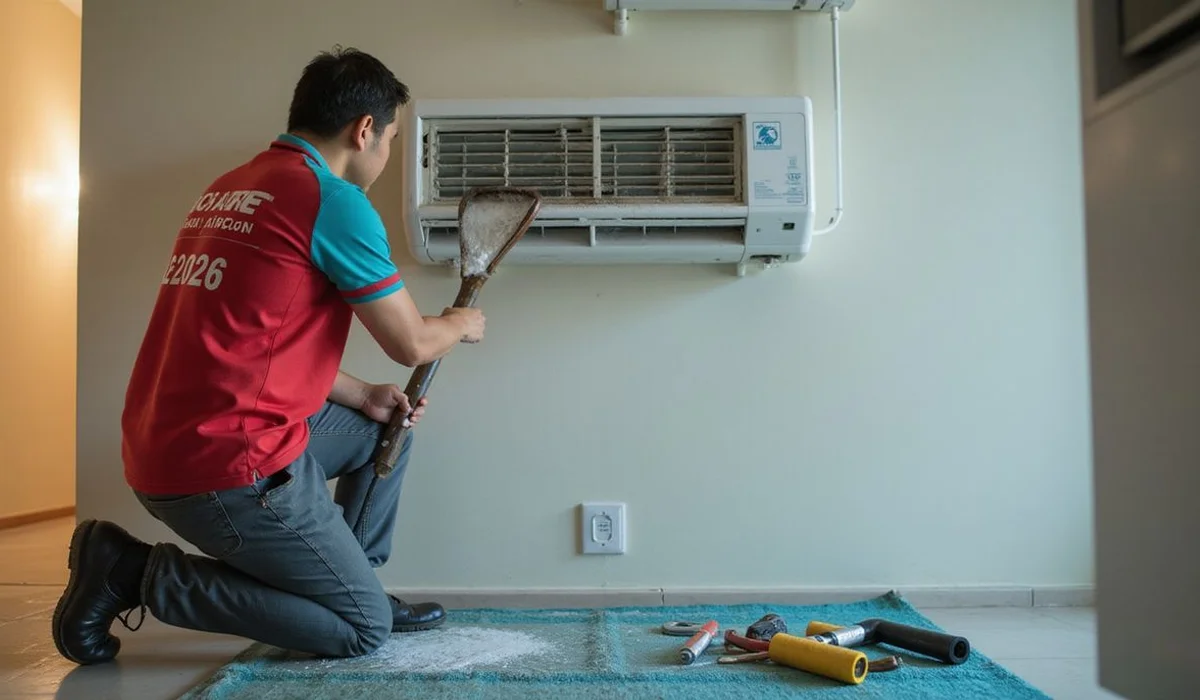
What a Chemical Wash Actually Does
Standard aircon servicing covers the basics: cleaning the filter, brushing the condenser fins, and flushing the drain line. It handles surface-level dust and keeps the unit running between deeper cleans. But it cannot reach what builds up inside the fan coil and blower wheel over months of continuous operation.
In Singapore’s climate, where units often run 12 to 16 hours a day against persistent humidity, mould and biofilm accumulate faster than in most other countries. The warm, damp interior of your fan coil is the perfect breeding ground for bacteria and fungal growth. A chemical wash targets this layer directly. Specialist solvents are applied to the coil and blower wheel, dissolving the organic matter that brushing and rinsing simply cannot remove.
The result is measurable. Airflow improves because the coil fins are no longer blocked. Cooling output recovers because heat exchange across clean aluminium is far more efficient. That musty smell which kept returning after every standard service disappears once the biofilm causing it has been properly dissolved.
Chemical Wash or Full Overhaul - Which Do You Need?
These two terms get used interchangeably online, but they are different procedures with different levels of intervention.
A chemical wash is performed in-situ. The indoor unit stays mounted on your wall. We apply chemical solvents to the fan coil, blower wheel, and drain tray, let them work through the fouling, then rinse thoroughly. This suits units that are moderately dirty, typically those that have not been chemically cleaned in 2 to 3 years but are otherwise in good working condition.
A chemical overhaul involves fully dismantling the indoor unit from the wall. Every component, including the fan coil, blower wheel, drain pan, and housing, is removed and soaked in chemical solution. This is the right choice for units older than 8 years, units that have never had a deep clean, or systems where the fouling is severe enough that an in-situ wash will not fully clear it.
Our technicians assess your unit and recommend the appropriate level of treatment. We would rather perform a chemical wash where it is sufficient than push an overhaul where it is not needed.
How Humidity Affects Your Fan Coil
The reason aircon chemical wash services are so common here comes down to one factor: humidity. With average levels sitting between 70% and 90% year-round, every indoor fan coil operates in conditions that accelerate biological growth.
Condensation on the coil surface is constant. In older HDB blocks, where many lack dedicated aircon ledge ventilation, the outdoor unit works harder and pushes the indoor coil to produce even more moisture. Over time, this creates a thick layer of organic sludge on the coil fins and inside the drain tray.
The Northeast Monsoon season from December to March brings the wettest conditions. Units running through this period without adequate drainage often develop jelly-like biofilm blockages in their drain lines. Standard servicing will flush these temporarily, but a chemical wash eliminates the root layer of growth that causes the blockage to return.
Coastal properties face an additional challenge. Salt-laden air corrodes the aluminium coil fins faster, making them rougher and more prone to trapping mould spores. For these homes, we recommend chemical washes on a shorter cycle of 12 to 18 months.
How We Protect Your Home During the Job
Chemical washing involves solvents and water, so protecting your furniture and flooring is a non-negotiable step for our team. Before any chemicals are applied, we lay protective sheeting across the floor beneath the unit, cover nearby furniture and electronics, and set up drip trays to catch runoff.
For units installed above beds or workstations, we create a secondary containment layer. Our technicians carry extra-wide plastic sheeting specifically for these situations. In condominiums with hardwood or marble flooring, we use padded floor coverings to prevent any chemical drip from marking the surface.
The solvents we use are professional-grade but formulated to be low-odour and non-corrosive to painted surfaces. Any residual smell dissipates within an hour of completion. Once the wash is done, we clean the work area, remove all sheeting, and leave your space the way we found it.
Inverter-Safe Cleaning for Modern Systems
Most aircons installed locally over the past five years use inverter technology with R32 or R410A refrigerant. These systems have sensitive PCB electronics and aluminium fin coatings that react poorly to harsh, off-the-shelf cleaning chemicals.
At iCare Aircon, every chemical solution we use has been tested for compatibility with modern inverter systems from Daikin, Mitsubishi Electric, Panasonic, and Toshiba. We follow manufacturer-specific cleaning guidelines to ensure the wash does not void your compressor warranty or damage the hydrophilic fin coating that helps with moisture drainage.
For older non-inverter units running R22 refrigerant, we use a different solvent formulation suited to the heavier copper and aluminium construction of those coils. Matching the chemical to the system matters, and getting it wrong can cause corrosion that only shows up months later.
When to Schedule Your Next Deep Clean
Not every aircon needs a chemical wash on the same cycle. Here is a practical guide based on what we see across thousands of service calls each year.
Every 12 to 18 months: Units in high-humidity zones such as ground-floor flats, coastal properties, or kitchens with heavy steam exposure. Also recommended for households with allergy or asthma sufferers, where mould in the fan coil can aggravate symptoms.
Every 2 to 3 years: The standard cycle for most residential units. If your aircon runs daily and you keep up with annual general servicing, a chemical wash on this schedule will maintain performance and prevent mould from reaching problematic levels.
Right away: If you notice persistent musty smells, visible black stains on the blower wheel, water leaking despite recent servicing, or weak airflow at low temperature settings. These are signs the fouling has gone past what a regular service can address.
Booking is straightforward. WhatsApp us at 3138 2108 with your unit details and we will schedule a convenient time. Every aircon chemical wash and overhaul from iCare Aircon comes with a 90-day workmanship warranty. If the issue we treated returns within that window, we come back at no charge.
We serve homes and businesses across Singapore, including Tampines, Woodlands, Punggol, Jurong East, and the central districts.
Our Process
Assessment
We inspect the fan coil, blower wheel, and fins. Photos or videos work if you'd rather we see it before we arrive.
Containment
Floor, walls, and furniture around the unit are covered. We set up drip trays and containment so nothing gets splashed.
Chemical Treatment
Specialist solvents are applied to fan coil, blower wheel, and drainage. Full overhaul dismantles the unit for a chemical soak.
Rinse, Reinstall, Test
Thorough water rinse, reinstallation, cooling test-run, and a written service report. 90-day warranty applies from this date.
Common Questions
What is the difference between a chemical wash and an overhaul?
+
How often should I get a chemical wash?
+
Will a chemical wash damage my inverter aircon?
+
How long does the process take?
+
Related Guides
Deep dives on chemical wash.
Aircon Chemical Wash Process: Step-by-Step (What We Actually Do)
Full walkthrough of an iCare Aircon chemical wash visit — from doorstep arrival to reinstallation and post-service test, so you know exactly what to expect.
Chemical Wash for Mouldy / Smelly Aircon: The Real Fix
If your aircon smells musty, sour, or gives you a headache when it runs — standard servicing won't fix it. Here's why chemical wash is the real solution.
Aircon Chemical Wash vs Chemical Overhaul: What's the Difference?
Chemical wash cleans the indoor unit. Chemical overhaul dismantles indoor AND outdoor units for deeper restoration. Here's when each one is the right call.
How Often Should You Do Aircon Chemical Wash?
Every 2–3 years for daily-use aircons, 4–5 years for light-use. Plus symptoms that mean you should bring it forward, and why too-frequent washes are wasteful.
Related Services
Singapore Aircon Gas Top-Up Specialists
Refrigerant top-up with proper leak detection first. A sealed system should not need gas unless there is a leak, and we find it before charging.
Same-Day Aircon Repair and Troubleshooting
Diagnosis and repair for aircons that are not cooling, leaking water, making strange noises, or showing error codes. All brands, same-day service available.
Ready to Book Your Aircon Service?
WhatsApp us for same-day slots, transparent pricing, and a 90-day warranty.