
Aircon Gas Top-Up Singapore - We Find the Leak First
Refrigerant top-up with proper leak detection first. A sealed system should not need gas unless there is a leak, and we find it before charging.
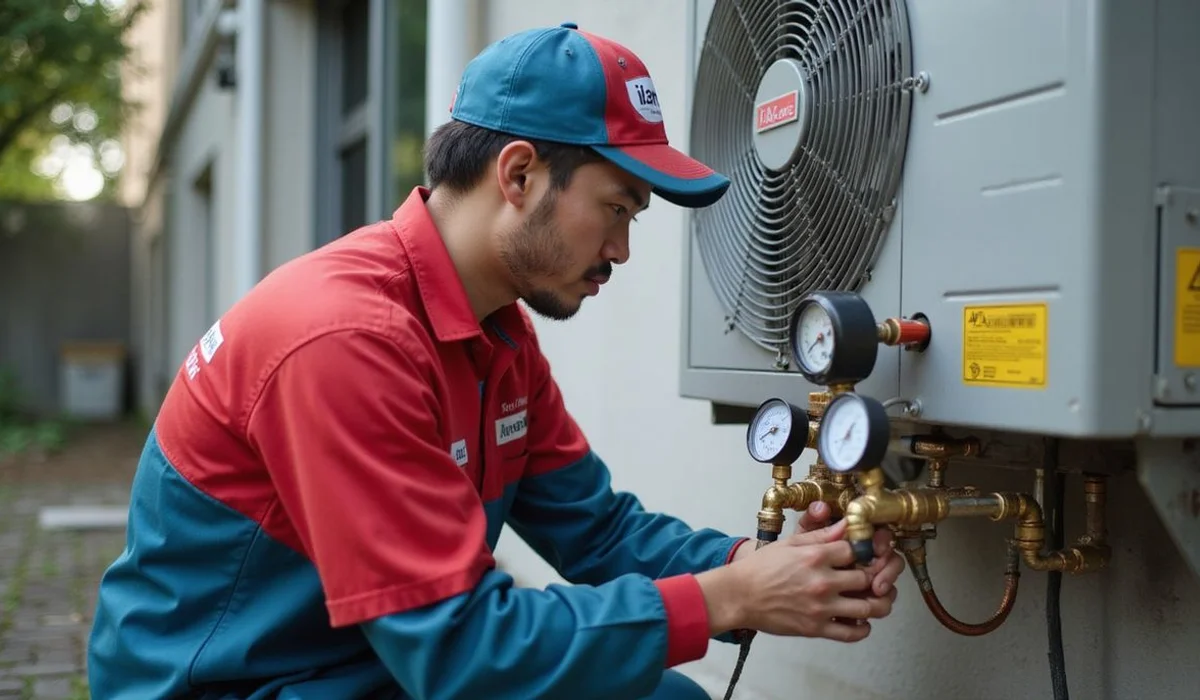
Why Your Aircon Keeps Losing Gas
Here is something many aircon owners in Singapore do not realise: refrigerant does not get consumed. It circulates in a sealed loop between your indoor fan coil and outdoor compressor. If your unit is blowing warm air and a technician says you need a gas top-up, the real question is why the gas left in the first place.
The answer is almost always a leak. It could be a slow weep at a flare nut connection, a pinhole in the copper piping, or a crack in the evaporator coil. Without finding and fixing that leak, any top-up is a temporary measure. You get cold air back for a few weeks, the refrigerant escapes again, and you pay for another top-up. Some homeowners go through this cycle three or four times a year before realising the leak was never addressed.
This is why iCare Aircon performs leak detection on every gas top-up job, without exception. It costs a little more time upfront, but it means the charge actually holds.
The Leak Detection Process
Finding a refrigerant leak requires more than guesswork. Our technicians use three methods in sequence to pinpoint the source before any gas is added.
Soap bubble test. A soapy solution is applied to all visible flare joints, service valves, and copper connections. Bubbles form where gas is escaping. This catches the obvious leaks at connection points quickly and reliably.
Electronic sniffer. A handheld sensor detects refrigerant vapour at very low concentrations. This is essential for finding slow leaks in concealed piping runs or behind wall-mounted units where visual inspection is not possible.
Pressure test. The system is pressurised with dry nitrogen and monitored for pressure drop over a set period. This confirms whether the system holds pressure after a suspected leak has been repaired, and it catches micro-leaks the sniffer might miss.
Only after the leak is found and repaired do we evacuate the system with a vacuum pump to remove air and moisture, then charge it with the correct refrigerant to the manufacturer’s specified weight.
Common Leak Points in Singapore Homes
Over 12,450 completed jobs, we have seen leaks in virtually every possible location. But some are far more common than others, and knowing where to look speeds up the diagnosis.
Flare nut connections are the most frequent leak point. These brass fittings join the copper piping to the indoor and outdoor units. Over time, thermal cycling causes the joint to loosen slightly. A re-flare and proper torque usually resolves it within 30 minutes.
Copper piping damage is the second most common cause. In HDB flats, piping runs through trunking along walls and ceilings. If the piping was kinked during installation or if the wall bracket shifted, stress cracks develop over time. We repair or replace the affected section and pressure-test before recharging.
Evaporator coil leaks are the worst case. Corrosion or manufacturing defects can create pinhole leaks in the indoor coil itself. If the coil is leaking, patching is rarely cost-effective. In these cases, we give you an honest assessment of whether replacing the indoor unit is the better option, factoring in the unit’s age and condition.
In newer BTO developments around Punggol and Sengkang, we occasionally see leaks caused by piping that was pre-installed during construction but not properly pressure-tested before handover. If you moved into a new flat and the aircon lost cooling within the first year, this is a common explanation.
R22, R410A, or R32 - Matching the Right Refrigerant
Each aircon system is designed for a specific refrigerant. Mixing types or using the wrong one damages the compressor and voids the manufacturer’s warranty. Here is a quick guide to what your unit likely uses.
| Refrigerant | Era | Common Brands |
|---|---|---|
| R22 (HCFC) | Pre-2010 | Older Daikin, Panasonic |
| R410A | 2010 to 2018 | Mid-generation inverters |
| R32 | 2018 onward | New Daikin, Mitsubishi, Toshiba |
R22 is being phased down globally under international agreements, and the cost of sourcing it continues to rise. If your unit still runs on R22 and requires a significant repair alongside the top-up, we will advise honestly on whether a system upgrade makes better financial sense over the medium term.
R32 is the current standard for new installations island-wide. It has a lower Global Warming Potential than R410A and operates at slightly higher pressures, which means technicians handling it need proper training and equipment. Our team is NEA-certified for handling and recovery of all three refrigerant types.
What Sets a Proper Top-Up Apart
A proper aircon gas top-up is not just about adding refrigerant. The steps before and after the charge are what determine whether the fix lasts.
- Find the leak using the methods described above
- Repair the leak at the flare joint, copper section, or component level
- Evacuate the system with a vacuum pump to remove trapped air and moisture
- Charge to manufacturer spec using calibrated digital scales and the correct refrigerant
- Verify performance with outlet temperature readings and pressure gauge checks across all indoor units
Skipping any of these steps produces a fix that feels right for a few weeks but fails within months. Overcharging is just as harmful as undercharging. It stresses the compressor, increases electricity consumption, and shortens the lifespan of the system.
Cost Factors and What to Expect
The cost of an aircon gas top-up depends on the refrigerant type, the severity of the leak, and whether parts need replacing. A straightforward flare re-tighten with a standard R32 top-up sits at the lower end. An evaporator coil replacement with a full system recharge sits at the higher end.
We quote everything upfront after the leak detection is complete. The diagnostic fee is credited towards the repair if you proceed. If you decide the repair cost is not justified for the age of your unit, only the diagnostic fee applies, and we will give you our honest recommendation on next steps.
Every gas top-up and leak repair from iCare Aircon comes with a 90-day workmanship warranty. If the repaired leak returns within 90 days, we come back at no charge.
WhatsApp us at 3138 2108 to book a leak detection and top-up. We service all areas across the island, including Tampines, Jurong East, Woodlands, and Bedok.
Our Process
Leak Check
Before topping up, we check for leaks with soap test, electronic sniffer, and pressure test. Skipping this means wasting money.
Repair the Leak
If a leak is found (copper piping, flare nut, or evaporator), we repair it first. Topping up without fixing the leak is throwing gas away.
Evacuate + Charge
We evacuate air and moisture from the system with a vacuum pump, then charge to manufacturer spec with the correct refrigerant.
Performance Test
Pressure reading verification, outlet temperature test, and cooling performance check across all indoor units.
Common Questions
Why do you insist on leak detection before topping up?
+
How do I know which refrigerant my aircon uses?
+
Is R22 refrigerant still available?
+
How long should a proper gas top-up last?
+
Related Guides
Deep dives on gas top-up.
How Often Should Aircon Refrigerant Be Topped Up?
A properly sealed aircon should never need refrigerant top-up. If you're paying for it every 1–2 years, you have a leak — here's what to do.
Signs Your Aircon Needs Gas Top-Up (And Why It Shouldn't Be Often)
Ice on copper pipes, weak cooling that doesn't respond to servicing, hissing sounds — real signs of low refrigerant, plus the common upsell myths.
Ready to Book Your Aircon Service?
WhatsApp us for same-day slots, transparent pricing, and a 90-day warranty.