
Aircon Installation Singapore - HDB, Condo, and Landed
New aircon installation for HDB flats, condos, and landed homes across Singapore. Window, split, multi-split, cassette, and ducted systems handled end-to-end.
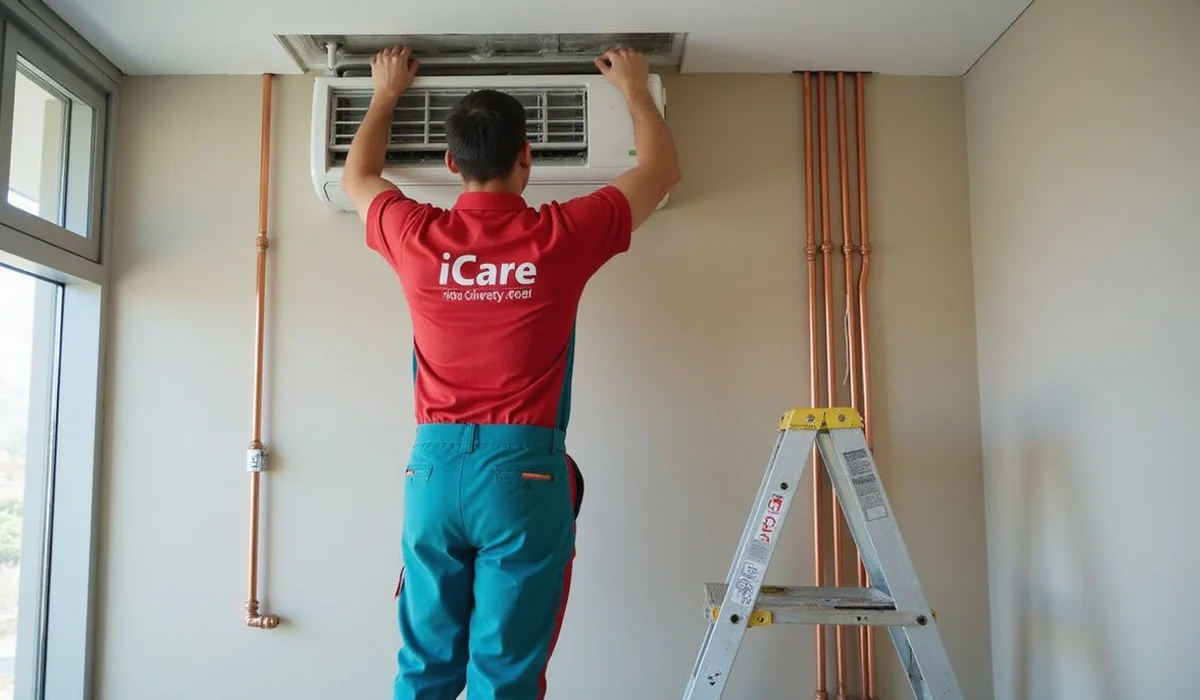
Planning Your Aircon Installation
A good aircon installation starts long before the technician arrives with the unit. The decisions you make during the planning stage, including system type, BTU sizing, piping routes, and condenser placement, determine how well the system performs and how long it lasts.
For new BTO flats, this is the best time to plan properly. The walls are bare, the trunking routes are open, and there are no furniture constraints to work around. For resale flats and existing homes, the planning is slightly more involved because we need to work with existing electrical loads, wall layouts, and sometimes replace old piping that cannot be reused.
At iCare Aircon, every installation begins with a conversation about your space. WhatsApp us your floor plan and we will recommend the system type, BTU sizing per room, and preferred piping routes before we schedule the site survey.
HDB, Condo, and Landed - What Each Project Involves
Not all installations are the same. The housing type determines the system design, the regulatory requirements, and the complexity of the job.
HDB flats are the most common installation type in Singapore. A typical 4-room flat needs a multi-split system serving 2 to 3 bedrooms, with the outdoor compressor mounted on the designated aircon ledge. Piping runs through wall-mounted trunking or concealed within false ceilings. The key constraint is the electrical load. Older flats may need a minor DB box upgrade to handle modern inverter systems safely.
Condominiums add a layer of regulatory coordination. Most condos require MCST approval before any installation work begins. We prepare the submission, arrange scaffolding permits where needed, and coordinate the work schedule to comply with condo-specific noise and access hours. Many condo MCSTs also require protective coverings on common corridors during the installation.
Landed homes present the most design flexibility but also the most technical complexity. Multi-split and ducted systems are common for double-storey properties. Piping runs are longer, the outdoor unit placement needs to account for noise to neighbours, and the BTU calculation must factor in larger floor areas, higher ceilings, and multiple sun exposures.
System Types We Install
- Single-split - one indoor unit paired with one outdoor compressor. The standard setup for individual rooms in HDB flats and condos.
- Multi-split - one outdoor compressor serving 2 to 4 indoor units. Ideal for 4-room and 5-room flats where ledge space is limited.
- Cassette - ceiling-mounted units for premium condos, retail spaces, and commercial offices.
- Ducted - concealed systems for landed homes and designer interiors where visible wall units are not desired.
- Window units - still occasionally installed for helper rooms, small studios, or older buildings without outdoor ledge provision.
Getting BTU Sizing Right the First Time
BTU sizing is the single most important technical decision in any aircon installation. An undersized unit runs constantly, never reaches the set temperature, and burns out early. An oversized unit short-cycles, leaving excess humidity in the air and shortening the compressor’s lifespan.
| Room Size | Typical BTU |
|---|---|
| Small bedroom (under 12 sqm) | 9,000 BTU |
| Master bedroom (12 to 18 sqm) | 12,000 BTU |
| Living and dining (18 to 28 sqm) | 18,000 BTU |
| Large living room (28+ sqm) | 24,000 BTU or higher |
These are baseline figures. Several factors push the requirement higher: direct sun exposure through west-facing windows, high ceilings common in newer condos, open-plan kitchen layouts that add heat load, and rooms with heavy occupancy.
Getting this calculation right at installation means you avoid years of poor cooling and wasted electricity. We size every room individually and will explain our recommendation so you understand the reasoning.
Navigating HDB and Condo Regulations
Aircon installation involves more regulatory compliance than many homeowners expect. Understanding these requirements before your installation date avoids delays and potential fines.
HDB compressor ledge rules. HDB specifies which ledges are approved for aircon compressor placement. The total weight of units on a single ledge must not exceed the structural limit, and compressors must be mounted on approved stainless-steel brackets. For newer BTO designs, the ledges are often smaller than older blocks, and our technicians are equipped to work in these tight spaces with proper safety harnesses as required by BCA.
MCST approval for condos. Condo management corporations set their own rules on top of national regulations. These commonly include approved working hours, mandatory protective floor coverings for common areas, scaffolding permit requirements for high-floor units, and specific placement restrictions for outdoor compressors. iCare Aircon manages the MCST approval process so you are not left handling unfamiliar paperwork.
Electrical requirements. Modern multi-split inverter systems draw more power than older single-split units. In resale flats with original wiring, the existing distribution board may not have a dedicated circuit for the aircon. We check this during the site survey and advise on any minor electrical upgrading needed before installation day.
NEA energy standards. All aircon units sold locally must meet NEA Minimum Energy Performance Standards. We recommend 4-tick or 5-tick rated units whenever possible, as the electricity savings over the unit’s 10-year lifespan significantly outweigh the upfront price difference.
Choosing the Right Brand for Your Space
Every major brand we install is reliable when installed correctly. The differences come down to specific strengths that matter more or less depending on your priorities.
- Daikin - strongest inverter efficiency ratings, premium build quality, widely stocked for servicing
- Mitsubishi Electric - quietest operation, excellent for bedrooms and study rooms
- Panasonic - nanoe-X air purification feature, solid value across the mid-range
- Toshiba - good price-to-performance ratio, popular for first-time BTO installations
- Midea and LG - budget-friendly options that perform well with proper installation
All units carry manufacturer warranty, typically 5 years on compressors. Our installation workmanship warranty covers piping, drainage, trunking, and mounting separately.
Common Installation Mistakes to Avoid
In our 10 years of aircon installation across the island, we have seen every shortcut and its consequences. Here are the mistakes that cause the most problems down the line.
Skipping the vacuum test. Before charging refrigerant, the piping system must be evacuated with a vacuum pump to remove trapped air and moisture. Skipping this step introduces moisture into the refrigerant loop, which corrodes components from the inside and reduces cooling efficiency. Every iCare Aircon installation includes a full vacuum test with documented pressure readings.
Incorrect drainage slope. The condensate drain line must slope consistently downward from the indoor unit to the discharge point. Even a slight dip or flat section in the line creates a low point where water pools and biofilm grows, leading to water leaks within months.
Undersized piping for the run length. Longer piping runs between the indoor and outdoor unit require larger diameter copper piping to maintain refrigerant flow. Using standard piping on a long run reduces cooling output and forces the compressor to work harder.
Poor condenser placement. The outdoor unit needs adequate ventilation to expel heat. Placing it in a cramped corner, too close to a wall, or facing another compressor restricts airflow and reduces efficiency. We check clearances during the site survey and advise on optimal placement.
Getting the installation right the first time saves years of recurring issues. WhatsApp us at 3138 2108 to start planning your installation. We serve all areas across Singapore, including Woodlands, Tampines, Punggol, Clementi, and Bedok.
Our Process
BTU Sizing + Quote
Share your floor plan, room size, and sun exposure. We recommend the right BTU and brand, then quote the full install.
Site Survey
Technician visits to verify piping routes, drainage, power supply, and condenser placement. MCST approval coordinated for condos.
Installation Day
Indoor and outdoor units mounted, copper piping run, drainage set up, power tapped in. Trunking installed neatly where required.
Cooling Test + Handover
Vacuum test, refrigerant charge, cooling verification, remote control walk-through, and warranty documentation.
Common Questions
What BTU size do I need for my room?
+
Do you handle MCST approvals for condo installations?
+
Which aircon brands do you recommend?
+
What warranty covers the installation work?
+
Related Guides
Deep dives on installation.
Aircon Installation Process: What to Expect on the Day
From site visit to final commissioning — what happens on aircon installation day in Singapore, how long it takes, and how to prepare.
How to Choose Aircon BTU Size (Singapore Rooms)
BTU sizing formula for Singapore rooms, adjustment factors for sun exposure, occupancy, and kitchens, plus a quick reference table by room size.
Types of Aircon Systems for Singapore Homes (Split, Multi, Cassette, Portable)
Split, multi-split, cassette, window, portable — the 5 main aircon system types, when each one fits, and typical install costs in Singapore.
Ready to Book Your Aircon Service?
WhatsApp us for same-day slots, transparent pricing, and a 90-day warranty.